
The Prosperity Paradox: Are we in a silent recession?
Global growth projections for 2026 are on a steady rise. The World Bank expects global GDP
growth of 3.1 to 3.3. Economic forecasts indicate stability, unemployment rates have become manageable,
and global financial markets are largely in recovery from the COVID-19 shock. On a macro scale, the
The economy is expanding. Yet, for the average person, daily life is becoming increasingly expensive and
financially restrictive. This disconnect creates a paradox; traditional economic indicators signal growth.
markets are expanding, and opportunities are increasing, but individuals are facing what feels like an
economic decline, as purchasing power weakens and financial anxieties rise. Many wonder why, in a
seemingly stable economy, they feel as though their financial strengths have weakened. This paradox
The gap between macroeconomic stability and microeconomic instability has been described by analysts as a “silent recession."
Forbes defines a "silent recession" as a period of time where wages shrink and the cost of living rises while the stock market and unemployment remain stable. A silent recession differs from an official recession in its lack of impact on the microeconomic level. The divergence between macro-level statistics and the micro-level experience of everyday life is the defining characteristic of a silent recession.
The central cause of a silent recession is inflation outpacing wage growth. Despite unemployment and
Wages remaining stable, this indicates an overall healthy job market. Inflation outpaces wage growth.
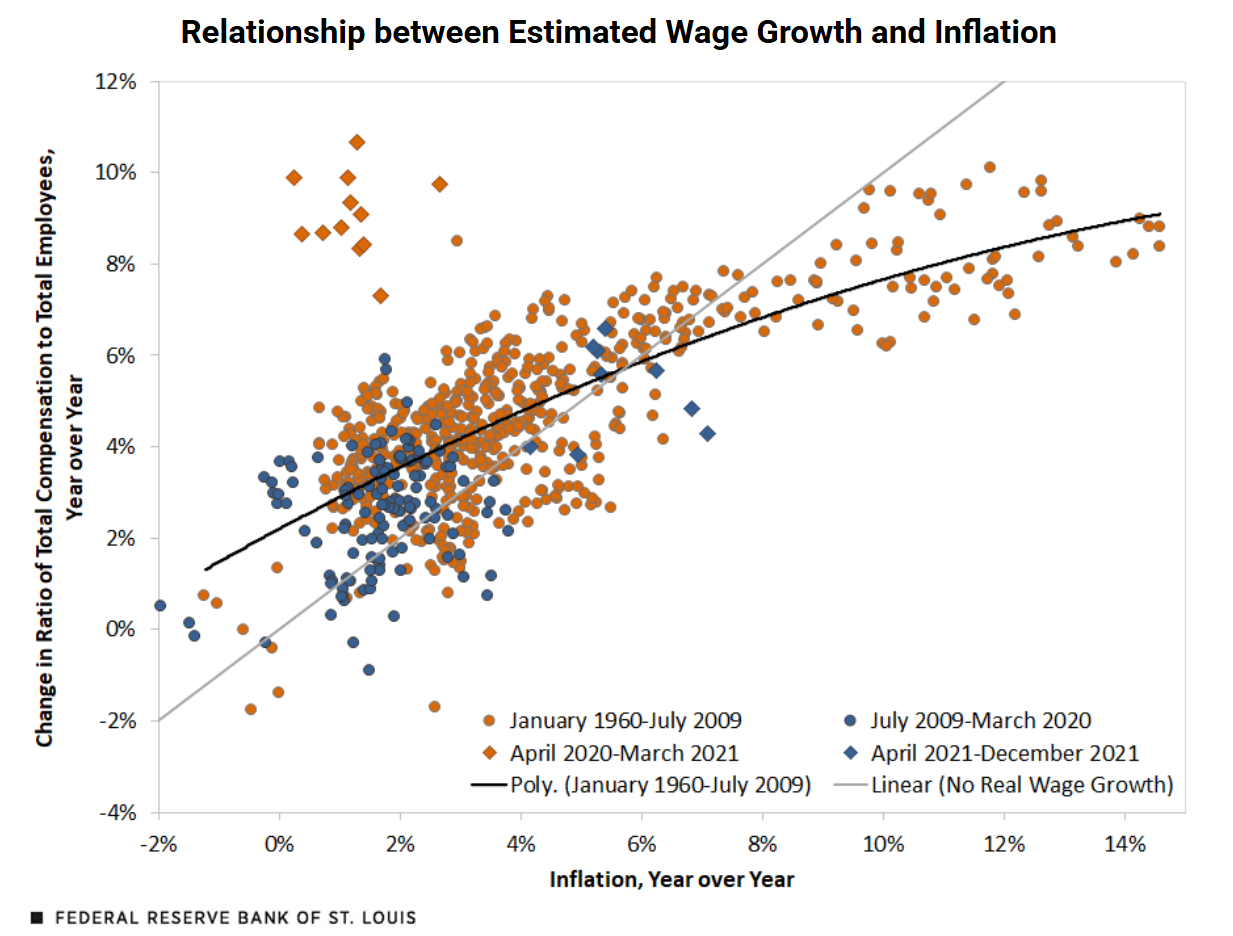
creating a financially shrinking environment for individuals. The Federal Reserve Bank conducted a study.
analyzing the rate of inflation in relation to wage growth post the COVID-19 recession. The results of the
A 2022 study indicated that growth in nominal wages didn’t translate into real salary growth (real salary
referring to wages adjusted for inflation), a decline in real salary growth erodes individuals' purchasing
power, while the cost of living continues to increase due to high rates of inflation (Figure 1).
SOURCES: FRED (Federal Reserve Economic Data), Bureau of Labor Statistics, Bureau of Economic Analysis, and authors’ calculations.
Despite the world recovering from the events of the COVID-19 recession, the impact of it can still be felt today, especially for many young adults. Gen Z entering the workforce has had their world reshaped by major global disruptions. Many young professionals who entered the workforce before or during the pandemic faced major challenges such as widespread layoffs, salary cuts, and job insecurity. Many of these challenges still ring true to students entering the workforce today, while many exited the traditional workforce and turned to side gigs and entrepreneurship; the choice of taking alternative approaches to supplement income indicates economic pressure. Young professionals can still feel the ripple effects of the COVID-19 recession in their working lives.
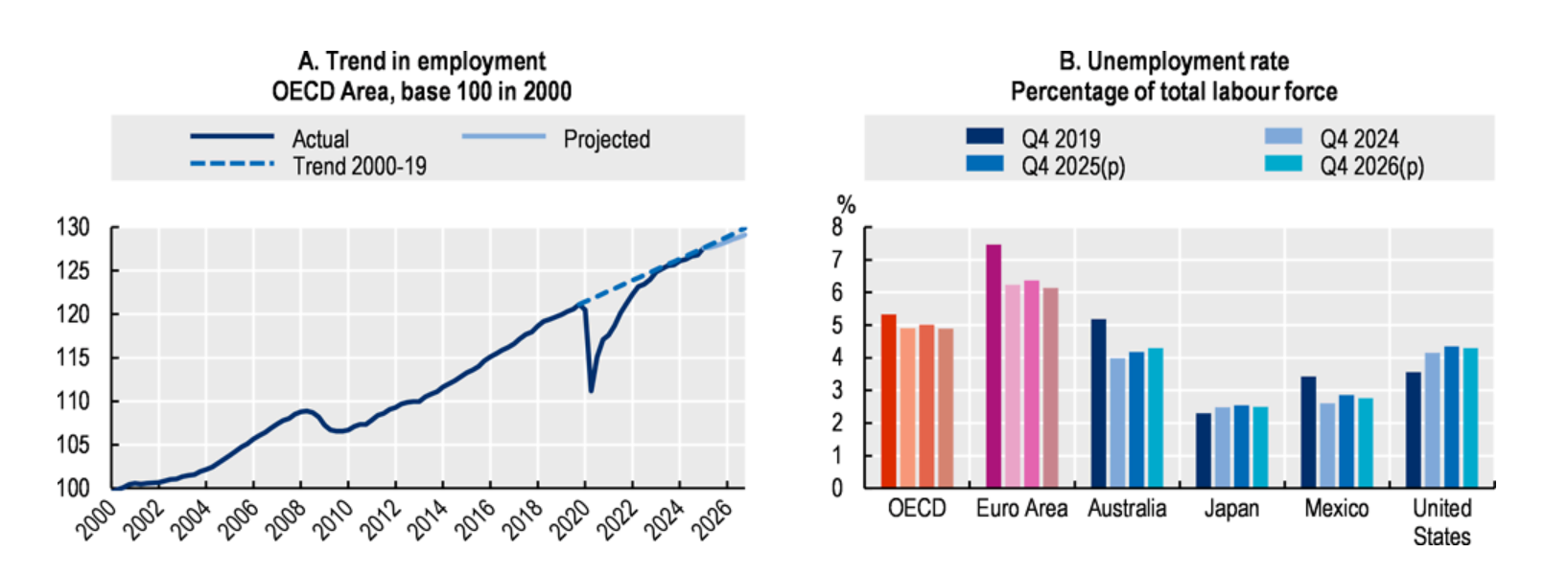
Current economic events have students and young professionals in a stalemate. A 2025 report from the OECD found historically low unemployment rates, returning to pre-COVID-19 levels by 2022 and continuing to steadily decline, citing that, most recently in 2025, unemployment rates had gone down to 4.9%. Furthermore, OECD reports found that both employment rates and labor participation have been steadily growing, albeit at a slower pace (Figure 2).
Source: OECD Data Explorer, “Economic Outlook 117”
Considering the current economic situation, many Gen Zers will be asking themselves what the future holds for them. In the context of Iraq and Kurdistan, structural pressures such as youth unemployment, currency volatility, and limited opportunities may leave many feeling disheartened. A silent recession
ultimately challenges traditional notions of prosperity. If economic growth doesn’t translate into real-life financial growth, is it truly economic recovery? Until growth is felt as clearly in personal lives as it is seen in international statistics, the silent recession will remain less about numbers and more about lived experience.
- Lala Mohammed Sidiq