
Mental Health: How is Iraq Doing Compared to Sweden?
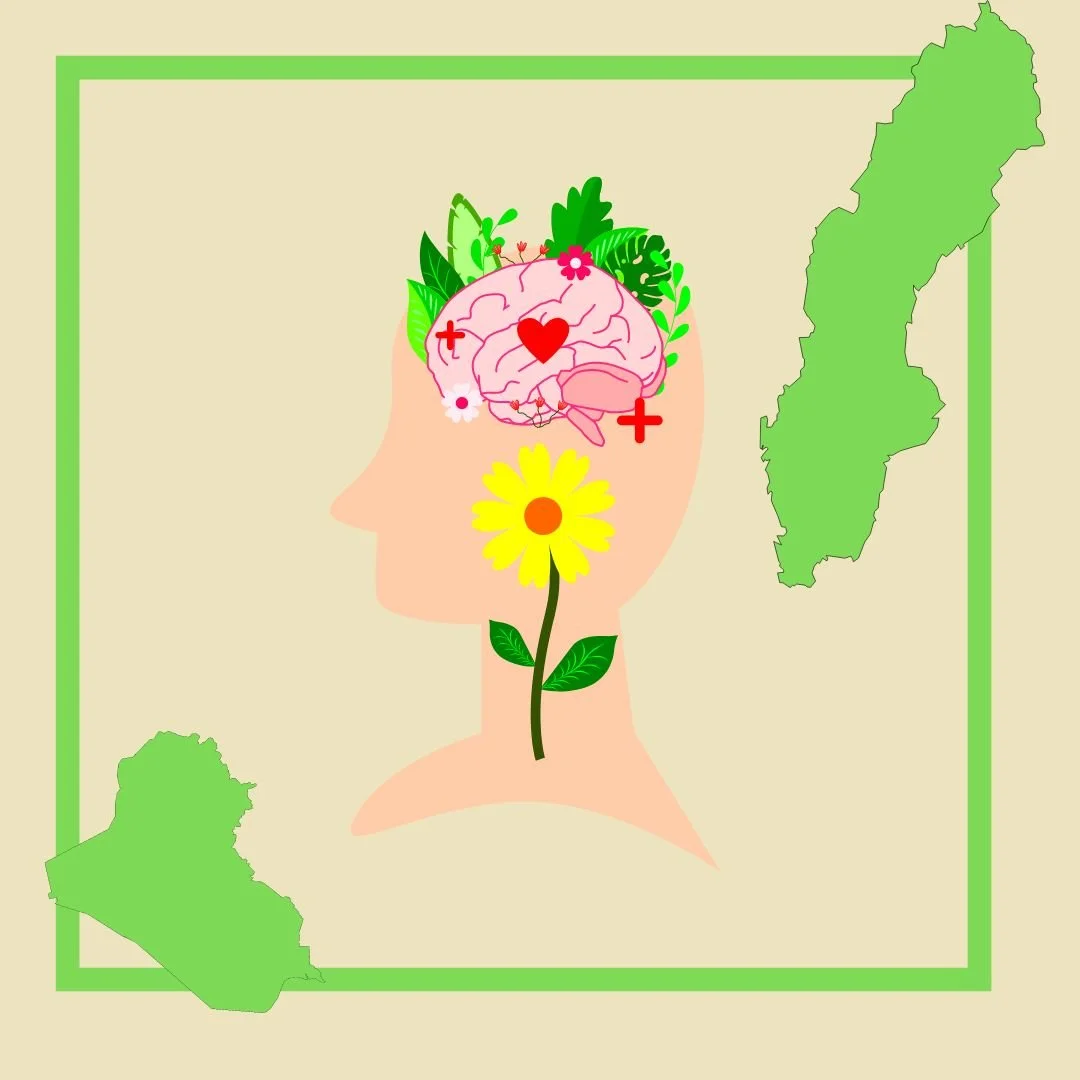
Mental health affects people’s productivity greatly . How much support the working-age adults receive can define how healthily an industry and its workers can function as a whole. Iraq has been through many crises for the past 20 years, and these have impacted the mental health of its people. So where exactly is Iraq located on the global map of mental health compared to other countries on the globe?
Sweden is an example of a country that takes mental health seriously. According to the Eco Magazine, It is a leading country in positive mental health. The Swedish government has done research to back up their efforts in increasing positive mental health in the country.
According to the OECD organization, mental health problems have cost Sweden around 7 Billion EUR annually due to lost productivity. Research shows that 60% of the new disability claims of the Swedish population were related to mental health problems before the Swedish government took actions helping with this issue, starting with the mental health of the younger generations by making investments and increasing the sick-leave privileges for mental health cases.
Iraq, on the other hand, does not provide proper attention for mental health disorders for employees in the private or the public sectors. Given the events that took place in Iraq in the last 20 years, deteriorating mental health has become an issue.
Some private organizations are taking responsibility dealing with local cases. For example, the MSF organization has established an agenda for treating individual cases regarding mental health in places such as Mosul, Sinjar, Kirkuk, and Baghdad.
According to World Health Organization, the only mental health service offered by the Iraqi government is a suicide prevention programme. No functional programmes are available in schools to prevent mental health when they reach employment age, they are at a proper level of mental health, thus helping problems in early ages. Also, psychiatrists only exist in a number of private schools, and none in the public schools
The Swedish government, by contrast, tries to address students' mental health problems to increase overall productivity.
According to the Swedish social insurance agency, more than 40% of the sick-leave requests in Sweden during 2020 were because of psychological conditions. Burnout is one of the mental disorders that the Swedish government is trying to treat in employees to make them more productive, and this is why burnout and chronic stress are official diagnoses that entitles sickness benefits in Sweden. According to the Iknal Semikal article the Swedish government believes that such cases need between one and six months of treatment and rest, without major financial problems, as approximately 80% of the worker’s salary will still be paid by the Swedish social insurance agency.
The Swedish government also provides individual therapy access through the public healthcare system that requires no additional costs. Yet, its goal is prevention, not treating burnout cases. Burnout is a condition that happens due to excessive work and stress.
Iraqi people suffer from mental health issues, and these issues need to be addressed. The steps that the Swedish government has taken can also be useful in trying to find a solution for this issue. Mental burnout is not even considered a serious excuse for a sick-leave in Iraq. There is not even an exact synonym for the word “burnout” in Arabic. The closest terms for it are “tired” and “exhausted.”
The comparison may not look fair, but it serves in highlighting just how much Iraq can improve especially after suffering from one crisis after another. The Iraqi government should take steps towards elevating the mental health of its population before it becomes an even huger problem.
- Hadi Ammar