
Covid-19 leaves its footprint on AUIS club activities
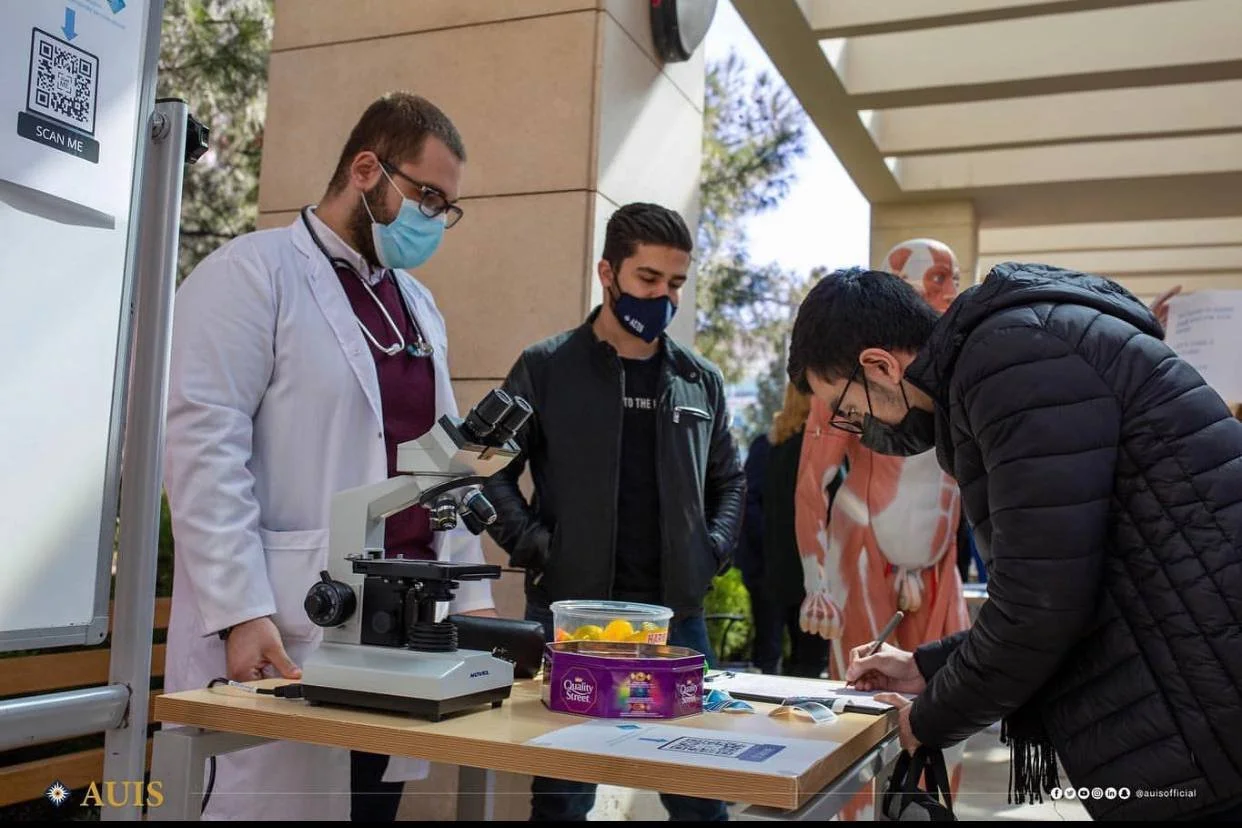
Students enrolling into Code Blue club on Tuesday. Photo: AUIS
SULAIMANI (AUIS Voice) – Despite the long halt to the educational process and changing the patterns of learning, the coronavirus has impacted the extra curricular activities of American University of Iraq Sulaimani (AUIS) students after their return to campus for the 2021 Spring semester.
Mask-clad students gathered at AUIS’s Quad Area on Tuesday – the corridor between Building B and C – to hold Club Day. Every semester, the American university holds the day, in which various student-led clubs introduce their activities and enroll club lovers.
The Club Day was witnessed in sunny outdoor setting in a bid to mitigate the risk of infections among students, according to AUIS student services, which asked students to stick to health measures while visiting booths.
The pandemic’s footprint is more than that on students. The activities that they used to enjoy pre-Covid are now held with extra caution and less attendance due to the regulations.
“Covid has really burdened our activities,” Hassan Majeed, president of Debate Club, told AUIS Voice on Wednesday.
The club had recently held a conference on the role of social media in the society. The organizers had to go through exhaustive bureaucracy, asking for permission from the local government.
“We had to be very careful that our event will not be a place where the virus could easily circulate and infect the attendees,” Majeed added, referring to the measures taken at the event such as keeping six-feet distance between the seats as well as wearing masks throughout the event.
Sometimes clubs’ activities are held outside the university’s campus, particularly for outdoor events.
Eunoia Archeology Club focuses on raising awareness and educating students on the archeological sites in the Kurdistan Region. The club regularly conducts trips to archeological sights both inside Sulaimani province and outside.
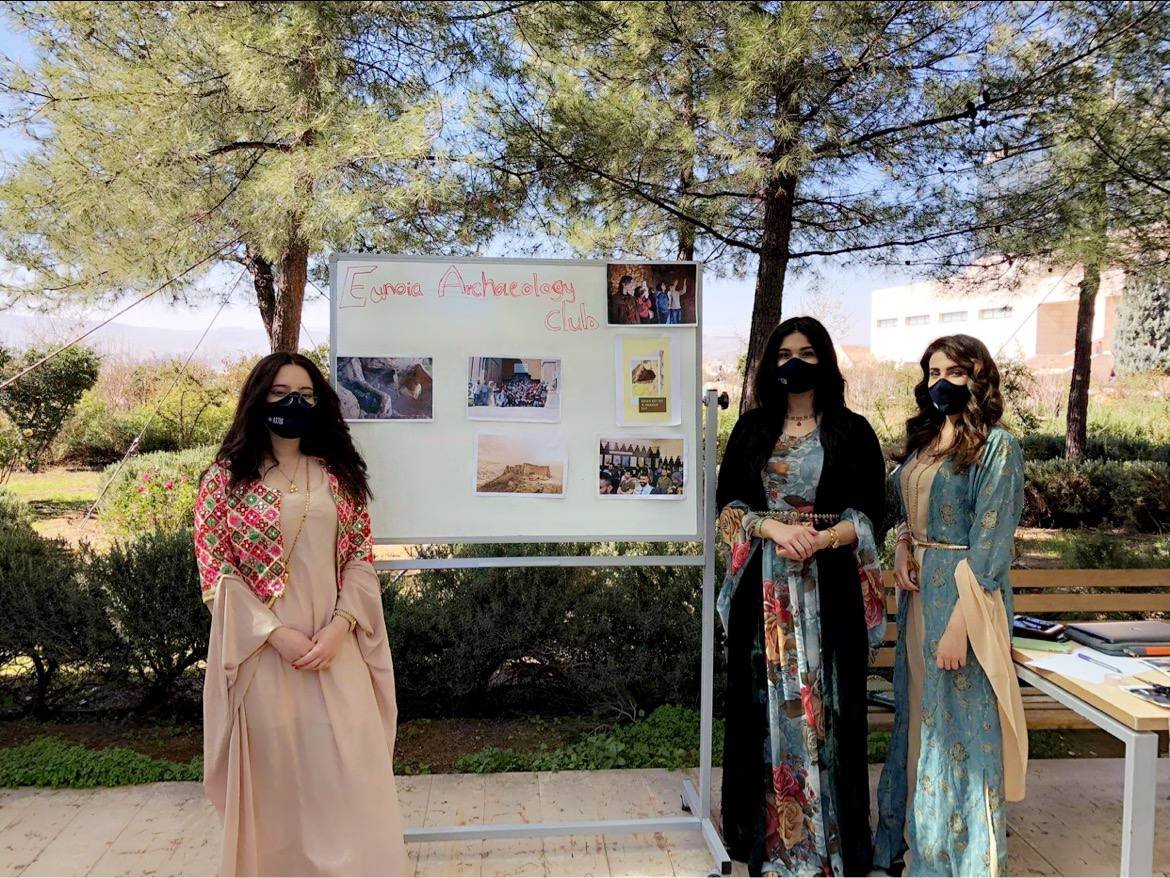
Eunoia Archaeology Club on Clubs Day. Photo submitted by Eunoia Archaeology Club
The club fears that in the wake of an expected second wave of the coronavirus, it would be “impossible” for them to maintain their activities, Zhulyan Mohammad, the club’s president told AUIS Voice.
“We can [still] hold activities during the pandemic since we adhere to the AUIS [health] policies,” Mohammad said, fearing it would not be likely if the second wave hits the Region.
On Sunday, the Kurdistan Region’s health ministry announced that it had detected first cases of UK-variant of the coronavirus in the capital city. According to official tally, the Region has so far announced 19 cases of the new variant.
The Region’s health minister on Tuesday said that most of the daily infections that are now recorded are of the new variant. The UK variant of the coronavirus is believed to spread faster and easier from one person to another.
“The pandemic prevented us from implementing on-site projects and field visits, and also many plans had to be rearranged in a way that is COVID friendly,” Lano Hassan, president of Code Blue told AUIS Voice.
Code Blue is a club that focuses on raising health awareness and provision of basic public health skills, through workshops, training, scientific publications and volunteering opportunities.
The university did not hold Club Day in September 2020 as on-site teachings were halted and classes had moved online due to the pandemic.
AUIS was the first university in the Kurdistan Region to move their classes online with the spread of the coronavirus in the region last spring.
The university now practices blended-learning – part of classes are taught online while others are held on-site. Due to the new adapted pattern, the campus hosts less students than prior to the coronavirus, and health measures are strictly enforced by the administration.
“When you go inside any University building, you must wear a mask that covers your mouth and your nose. No excuses will be tolerated on this front. If you're well enough to come to campus, you're well enough to wear a face mask,” read an email by Dean of Students Barin Kayaoglu on February 7.
- Davar Mohammad