
The Quiet Familiarity of Tea Breaks
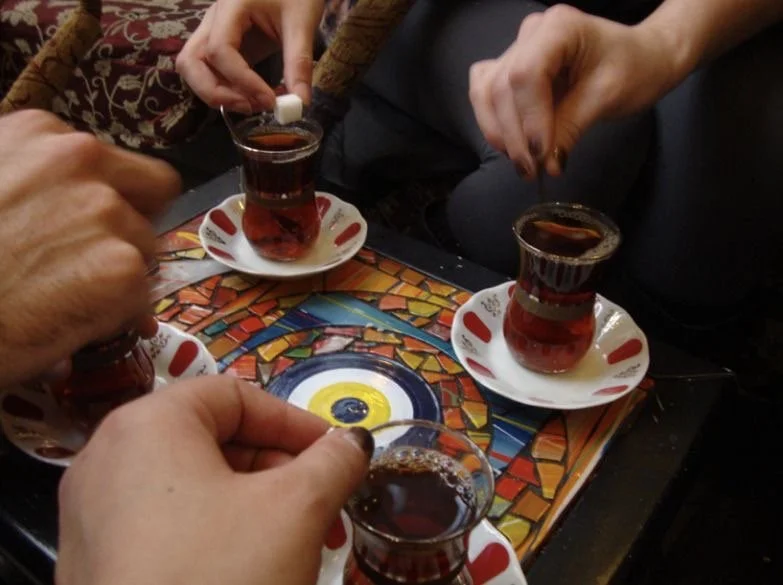
We’ve all certainly become accustomed to the cyclical routine of arriving on campus, attending classes, completing assignments, and returning to our homes. While these events undoubtedly build discipline and inspire success, they are not the heart of university life. The spaces in between, the intricacies of our interactions with one another, the communities we build—these are the moments that linger. The moments that are so minuscule and seemingly insignificant that they’re often overlooked, but still, they carry enough weight to quietly shape our sense of belonging and sometimes even pay homage to Kurdish culture.
All throughout campus, we build connections; connections built through small interactions that become the beginning of trust, comfort, and care. This can be seen in meaningful acts as small as walking one another to class, sharing a meal in the cafeteria, or simply having conversation over a cup of tea. What is it about the warmth of a cup of tea that deepens our relationships? Tea, or “cha,” is an integral part of the Kurdish community; it acts as a symbol of culture, hospitality, and social connection. In reality, what feels like a simple cup on campus is far more than that; it’s an act that echoes centuries of Kurdish tradition. In Kurdish culture, cha is rarely drunk in solitude but rather with loved ones, whether a family member, a partner, or simply a friend; the act of drinking tea signifies affection for one's company. In this act, tea became synonymous with building a community, and this aligns with the observation I’ve made in our university. Despite the hectic nature of courses and deadlines, the pauses in between where students can gather together to spend their breaks and sip on warm cups of tea end up becoming the moments that make our semester. It’s these interactions that help create a foundation for friendships that can last a lifetime.
The symbolism is evident most for Kurdish students; it’s a custom they’ve been used to for their entire lives. Since childhood, we have watched our parents drink tea with one another or with our extended family, albeit at times, it was multiple cups a day. There was tea with breakfast, there was tea after lunch, and there was tea that fit every occasion. The act of drinking tea is so habitual in the day-to-day life of a Kurd that it’s entirely predictable that we honor the same tradition when we’re on campus. There’s a familiarity in taking a couple minutes away from your schedule to socialize with your peers and share tidbits of your day over a cup of tea. However, even those who are not Kurdish recognize the essence of the ritual; no matter where you’re from, the act of sharing a drink or a meal with a loved one is an unspoken agreement of fondness.
For most, their primary achievement in university is completing their studies and receiving their diploma, but what can be said about the smaller achievements? The ones that are often invisible but that leave a permanent mark? They appear each time you offer your peers an act of care, each time you stay behind after your classes to spend extra time with your friends, and each time you find yourself holding a cup of tea alongside them. These acts serve a greater purpose, as they are a reminder that while our degrees are a measure of our academic success, it’s the communities we build on campus that shape who we are. Following our graduations, it’s the people we meet and the relationships we build during our most formative years that will follow us and pave our way forward towards our futures. In these shared moments, we honor our culture and cherish the friendships we make. Knowingly or unknowingly, Kurdish traditions continue on in moments throughout campus, presenting themselves in the calm pauses between classes when we choose to spend our time together in shared habits that reflect home. In this case, home isn’t a place; home is the tenderness we find within one another and the familial rituals we have in common.
- Dena Salam Ebrahem