
Why Humanity Chose Gold
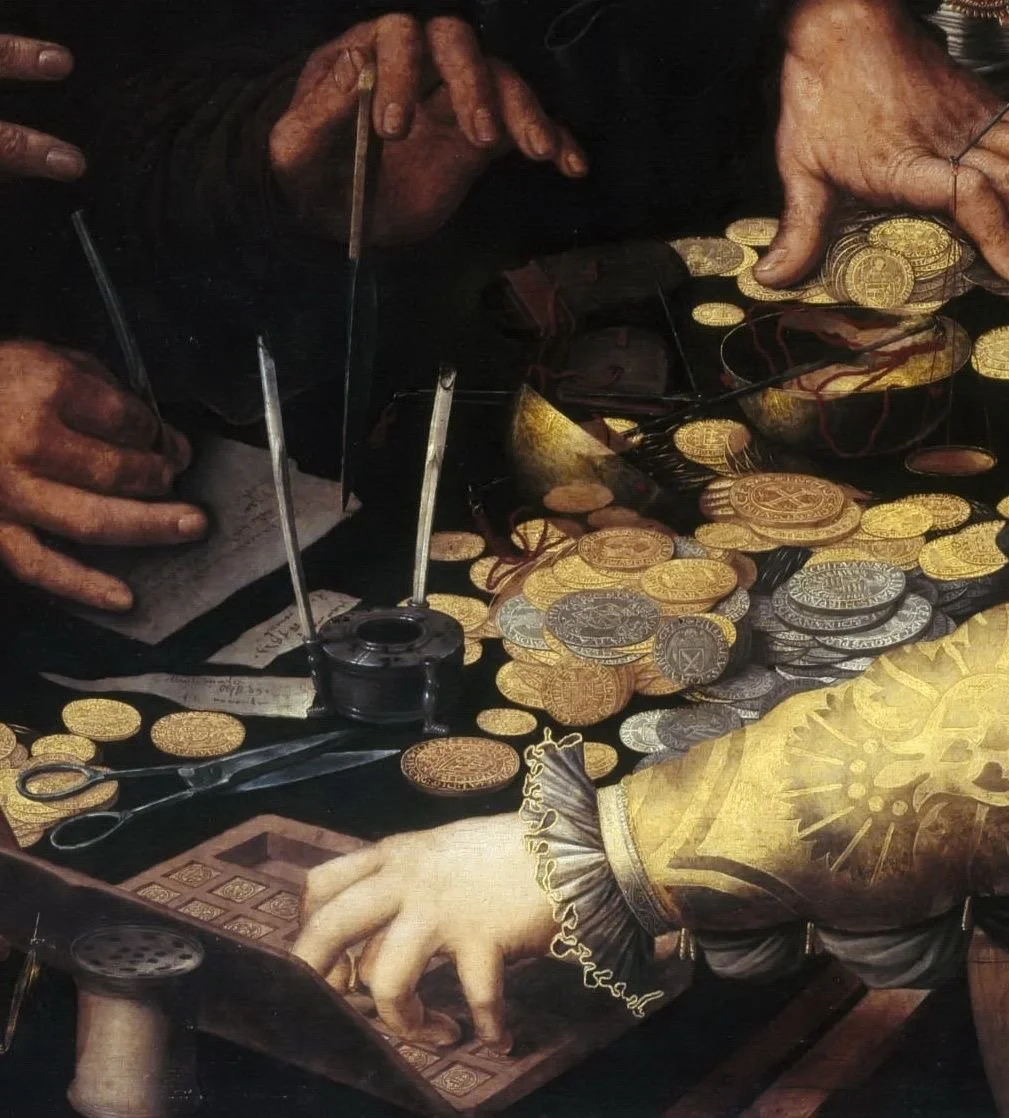
Gold has a long history of being connected with currency. For many centuries, humans considered gold a haven, and nowadays, gold is innately tied to currency, still holding a valuable spot in people's lives. centuries after gold’s value was discovered. This raises questions: Who decided gold would set the standard for value? Why should we care about gold’s value in the modern world?
To answer these questions, we need to look back to the beginnings of human civilization. Before gold became a currency, ancient humans would barter with goods and services. In early civilizations like in Mesopotamia and ancient Egypt, humans treated commodities like money, bartering grain and livestock for tools and clothing. In the barter system, it was the responsibility of the two individuals who were bartering to determine if the value of commodities was equal, depending on a "double coincidence of wants.” While there might have been some consensus among people, there was no set “price tag” on any given commodity.
The first-ever gold coin originated in ancient Lydia (World History Encyclopedia). In 630 BCE, an Anatolian king stamped a coin made from electrum (an alloy of gold and silver), giving it a distinct and recognizable mark. This mark came to be the coin's value. Ancient people always valued metals; their durability ensured a long life span of value, unlike grains and livestock, which were limited to specific seasons of life. Furthermore, metals were easy to alloy and to transport. Before the Lydian coin, merchants would weigh metals to determine their value. The stamping of the gold coin gave us the first instance in history where a single gold coin held a set value, revolutionizing trading for merchants. The Greeks soon adopted the gold coin as currency after the Lydians. Gold had transformed from being a valuable material into a functional economic tool (American Numismatic Association). As civilizations developed and global trade grew, gold became essential to global financial systems.
By the modern era, many countries had adopted the Classical Gold Standard, directly linking the value of their currency to a specified amount of gold (International Monetary Fund). The Classical Gold Standard made it so that domestic currencies were convertible into gold at fixed rates with little to no restrictions. Gold coins circulated in the market alongside notes. However, in the 20th century, the relationship between gold and currency drastically changed following the Second World War and the collapse of the Bretton Woods system in the 1970s. The Bretton Woods system (BWS) was established during the Second World War, named aptly after the Bretton Woods conference held in the U.S. in 1944. The BWS necessitated that the dollar be at the center of financial systems, drawing up a fixed exchange rate of US$35 per ounce of gold. The BWS made it so that most countries abandoned the Classical Gold. Standard in favor of fiat currency. Other countries had fixed but adjustable rates to the dollar. The BWS system was meant to give governments flexibility to stimulate their economies following the Second World War. Gold had transitioned from currency to a reserve asset associated with financial security.
In the 21st century, gold is no longer backing currencies, but that does not mean that gold has lost its value. Central banks keep large reserves of gold, and investors see gold as a safe haven during economically stringent times due to gold’s ability to hold value. Despite the fall of the BWS system, the value of currency now depends on the government authority and economic stability. Gold still plays a large role in both influencing the economy and indicating economic health. Gold is used as a hedge against inflation and currency fluctuations (World Gold Council). Furthermore, gold influences financial markets through exchange-traded funds (ETFs), making gold more accessible to everyday investors.
In Iraq and Kurdistan, gold holds both cultural and financial value. Traditionally, gold has always been important for saving and investment. Gold jewelry is often gifted for weddings, dowries, and family events as a symbol of prosperity. The Central Bank of Iraq holds gold as a national reserve of wealth, and ordinary people invest in gold as a way to safeguard wealth. Looking back on history, gold has always been and always will be one of the most valuable economic tools. Gold reminds us that value is never fixed; what once was a metal used for trade became one of the largest economic foundations in the world. Gold will always have a place in people’s lives, whether as currency or an economic safe haven during stringent times. Humans have made gold irreplaceable due to their inherent trust in it.
- Lala Mohammed Sidiq