
MoonWalkers
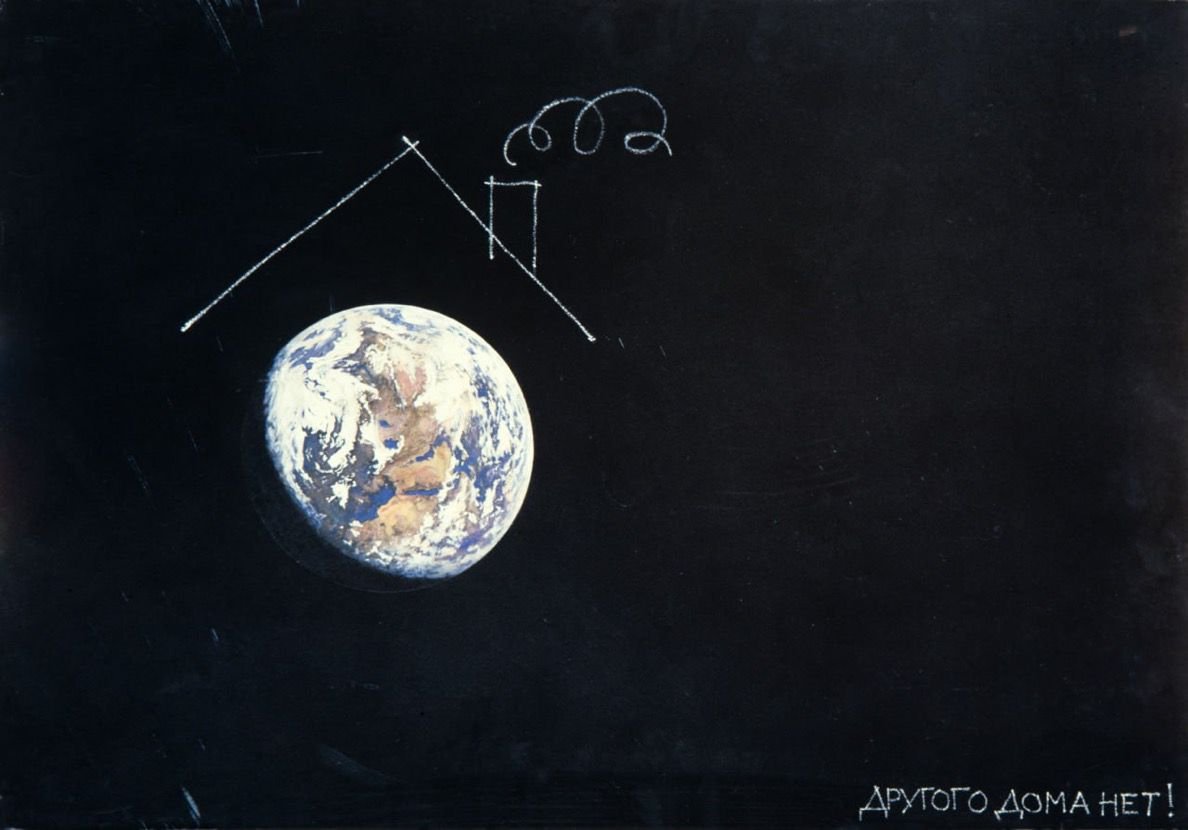
Rogachevsky, B., attrib. Другого дома нет! [There Is No Other Home!]. Poster. Soviet Union, ca. 1986.
“Oh him? He doesn’t even moonwalk!" The laziest intellectual posture of this era is not ignorance. It is the refusal to be impressed. There was a time, decades ago, when moonwalking was not only a historical feat or a space race during the Cold War; it was an expression of the highest levels of scientific optimism, backed by the collective faith that human beings could do improbable things. The moonwalking optimism of the 1970s, during the Apollo era, was carried by twelve men who lived to tell the tale.
On the 45th anniversary of Apollo 17, in December 2017, current and at-the-time president Donald J. Trump signed Space Policy Directive 1, ordering NASA back to the moon by 2024. This "accelerated" pledge, delayed as it were, came at a time when only four of the twelve moonwalkers were still alive to tell the tale. Buzz Aldrin and Harrison "Jack" Schmitt, the engineer-pilot and geologist who together walked the lunar surface on that final Apollo mission, stood theatrically beside the president as he signed what would eventually set into motion Artemis, NASA's second crewed lunar program, now targeting an actual surface landing by 2028. The directive was ambitious. It was also, whether anyone said so plainly, a concession: the men who could describe the smell of moondust or the strange curvature of a horizon with no atmosphere were running out of time, and no policy document could replace what these astronauts carried, astronauts who were not only symbols of human ingenuity and ambition but living narrators of an experience that once impressed us so. These moonwalkers were shrinking, living proof of what was possible. Through decades of memoirs, public talks, mentorships, and really, through the sheer stubbornness of still being alive, they kept a culture of scientific optimism breathing in a world that had grown harder, more fractured, and less patient with wonder. Their existence was, whether they intended it or not, a standing rebuke to the laziest intellectual posture of this age: cynicism.
NASA might have still had the data, images, and transcripts from the 1970s trip, but while civilization can carry its knowledge, it can also very easily lose the appetite for the frontier. That appetite loss is what happened nearly half a century after the Apollo missions, the faded memory of potential. That is until April 1, 2026. Four astronauts launched aboard the Orion spacecraft and, for the first time since 1972, left Earth's orbit. As of this writing, they are on a trajectory toward the Moon, scheduled to fly around it on April 6 at a distance that will surpass the farthest any human has ever traveled from Earth. They have not landed. They will not land. Artemis II is a flyby, the first crewed lunar mission in fifty years, and most of us were not even aware it was happening until it showed up on our feeds days before launch. Most of us were not even aware it was happening until a few days before launch. Most of us suddenly started seeing it on our feeds, so suddenly and so non-uniformly that it felt less like a planned national event and more like something the species stumbled into together. Christina Koch, the first woman on a lunar mission; Victor Glover, the first Black astronaut on one; Jeremy Hansen, the first non-American; and Reid Wiseman, the mission commander, may not yet have a landing to narrate, but they are, right now, sharing images and impressions with us in real time from a spacecraft headed for the Moon. The Apollo crews came home and wrote memoirs. This crew is narrating in transit, and we are watching.
It is worth remembering, though, that watching is not the same as sustainability. We have a speeding news cycle, and if the moonwalking optimism were to be sustained, someone has to carry the story after the spacecraft comes home, after the moon landing in 2028. If the original moonwalkers mattered not only because they had walked on the Moon but also because they could narrate that experience in ways that kept scientific ambition alive for everyone else, then moonwalking cannot only mean the literal act itself. It must also mean the work of carrying the frontier outward, of making difficult and improbable things legible enough for the rest of us to care. Moonwalking must describe the work of keeping that ambition alive in the culture, of making the frontier visible, intelligible, and worth caring about to people who may never touch it themselves. In that sense, moonwalkers can be storytellers like Andy Weir, a software engineer. Weir has made a career out of doing what the best scientific storytellers do: taking difficult, highly technical material and making it vivid without flattening it, rigorous without making it inaccessible, and funny without making it unserious. That this appetite for scientific optimism remains so palpable is perhaps best evidenced by the fact that Weir’s latest film has drawn hundreds of millions globally. Project Hail Mary is at 420 million at the time of writing. People are showing up again, looking for something to be brave for, and we can give them that through stories with something real to point at.
Moonwalkers can also be astronauts like William Anders, who on Christmas Eve 1968, photographed Earth rising over the lunar horizon, an image that made people feel, all at once, that their planet was
small, finite, and shared. Moonwalkers can also be catalysts like Elon Musk, whose Falcon 9 landings made spaceflight feel current again and changed the visual language of possibility. And finally, they can be people like us, watching Artemis II unfold in real time and feeling that stale reflex of cynicism give way, however briefly, to wonder.
- Zheen Salih Abdullah