
Introduction to Disability Studies: A Class that Changed My Perspective
Have you ever thought of taking a course that changes your life perspective on a certain topic to positive?
The topic of disability has never been touched upon and has always been ignored by the society, government, and education here in the Kurdistan Region and Iraq, which has led disabled people to difficulties, trying to fit in the society and access certain things.
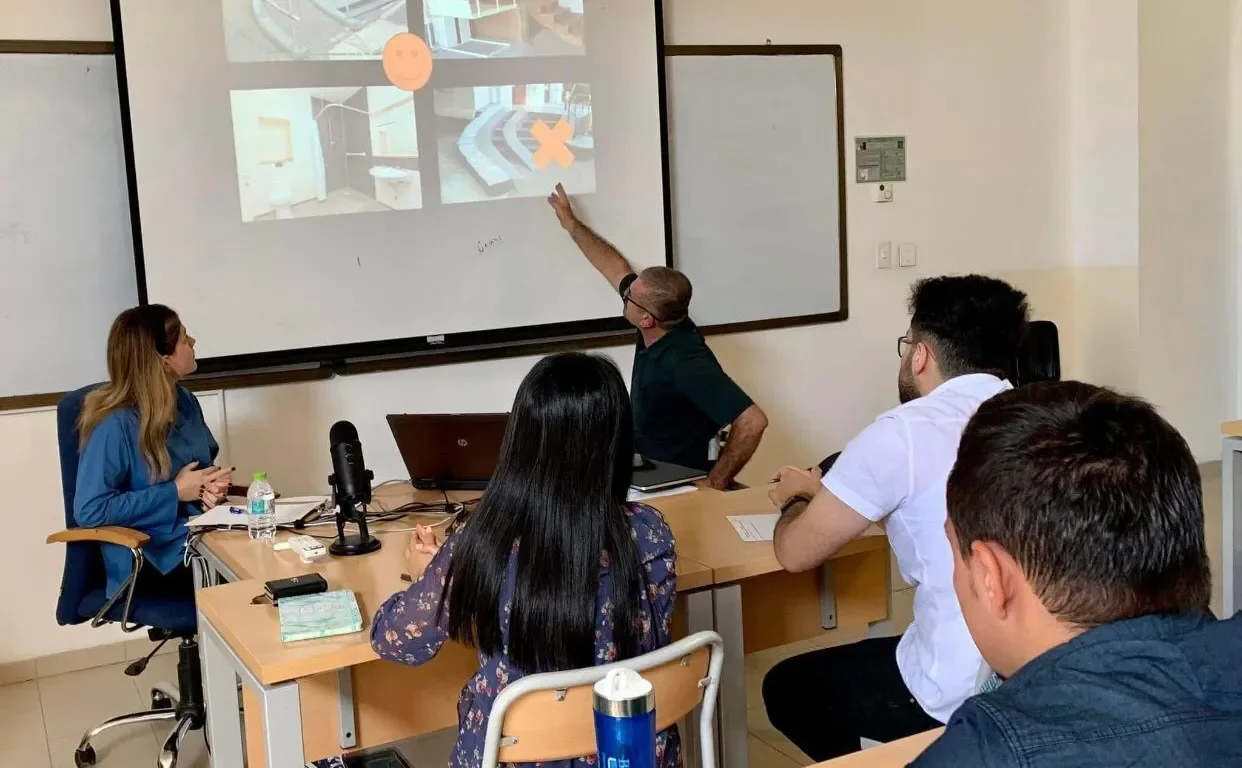
But there is hope. My experience— and I’m sure, other students’ too with the course, Introduction to Disability Studies, — proves the quality of our learning we have acquired beyond just the classroom. For the first time in Iraq and the Kurdistan Region, Introduction to Disability Studies, a course at AUIS has been offered since fall 2021 to provide students insights about the notion of disability from different viewpoints. The instructor of the course, Professor Lynn Rose, frequently brings guest speakers to talk about their life stories and experiences as a disabled person.
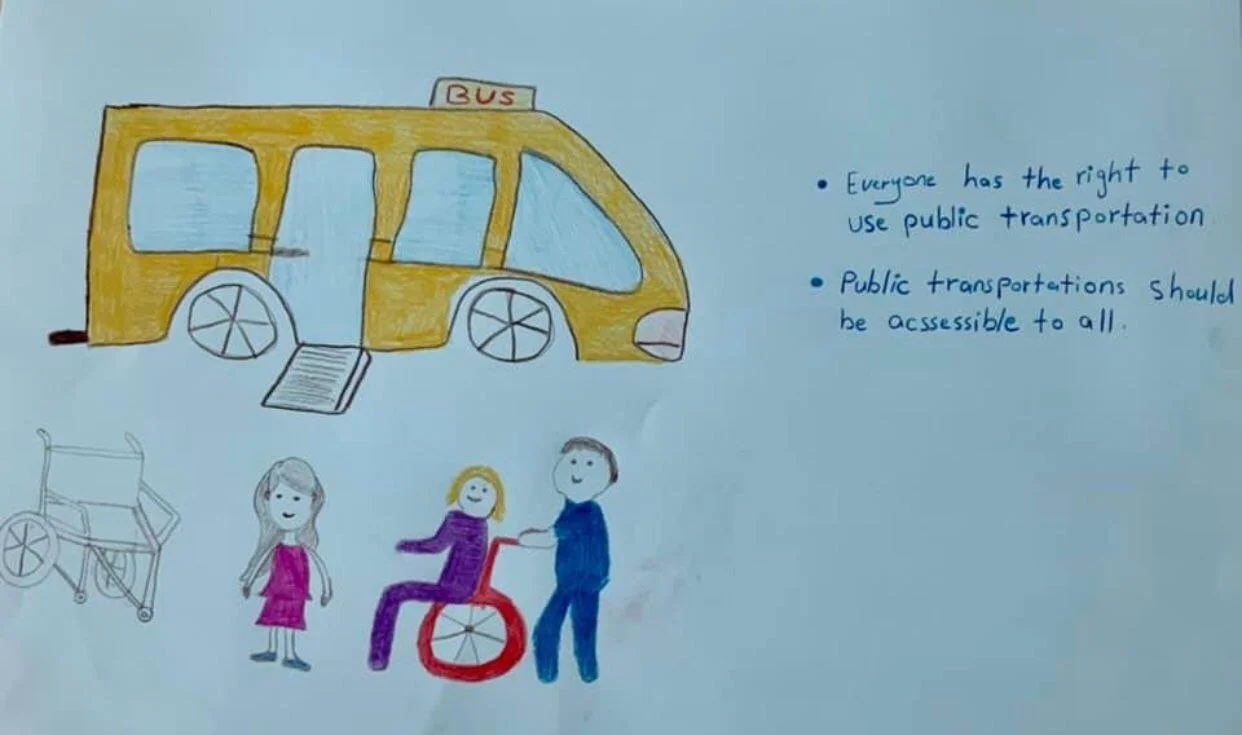
What is new and different about the course lies within the nature of the course: it holds onto a totally different view on the issue of disability and understanding our behavior towards people with disabilities.
My perspective on the topic of disability has completely changed from day one throughout the course. For instance, prior to taking the course, I did not know that there is actually a line between kindness and pity with disabilities: similar to the rest of the society, I would treat a disabled person with extra kindness and compassion out of a good intention, not knowing that I was mistaken. Sometimes, we try to offer them help without first asking, assuming that they need help even though they might not. We might also judge someone’s disability as a logical cause for the difficulties they may face or ask what their disability is out of curiosity, not realizing how much it irritates them.
Unfortunately, these common misperceptions tied to people with disabilities underline victimization and heroism. Society sees them as needed members who should always be pitied upon or sympathized due to their disabilities. And seeing a disabled person being able to achieve something would seem very heroic and inspirational for a non-disabled person, which also adds up to the misconception of understanding disability. They are portrayed to motivate non-disabled people by their external disabilities, which pushes them to try to prove to others what they can do.
The social and medical models of disability which convey insights in regard to attitudes, prejudices, and notions towards disability by the society were the core focuses of the course to comprehensively understand how the society perceives people with disabilities.
The social model of disability states that people are disabled by the barriers created by society. It aims to eliminate the barriers in the society and create an equal and accessible environment for disabled persons. However, the medical model insists that people with disabilities are disabled by their impairments and illnesses.
The medical model of disability is what lines with most of the societies, they see the disabled people as the problem, and not the physical barriers put in place by society.
Hence, from the course, I have learned that disabled people should be viewed as who they are and not what they achieve or how they look; otherwise, it would make them different from the rest of the society, which leads to exclusiveness and discrimination. Therefore, disabled people should not be defined with their disabilities or objectified to charity, but rather to be considered to have the same equal rights and dignities as everyone else does.
Now, instead of walking in the world naïve to the issues of disability, a course on disability study could expose the hidden problems that disabled people encounter everywhere.
Another interesting fact about the course is Professor Rose’s weekly guest speakers. The guest speakers who are also disabled share their stories and everyday experiences to foster a greater understanding of how people live with disabilities and the prejudices they face, going outside their homes, entering education, or interacting with the society. Thus, this has fully opened students’ eyes to see the problems and challenges that disabled people meet, which have been ignored by the Kurdish society and the education system here.
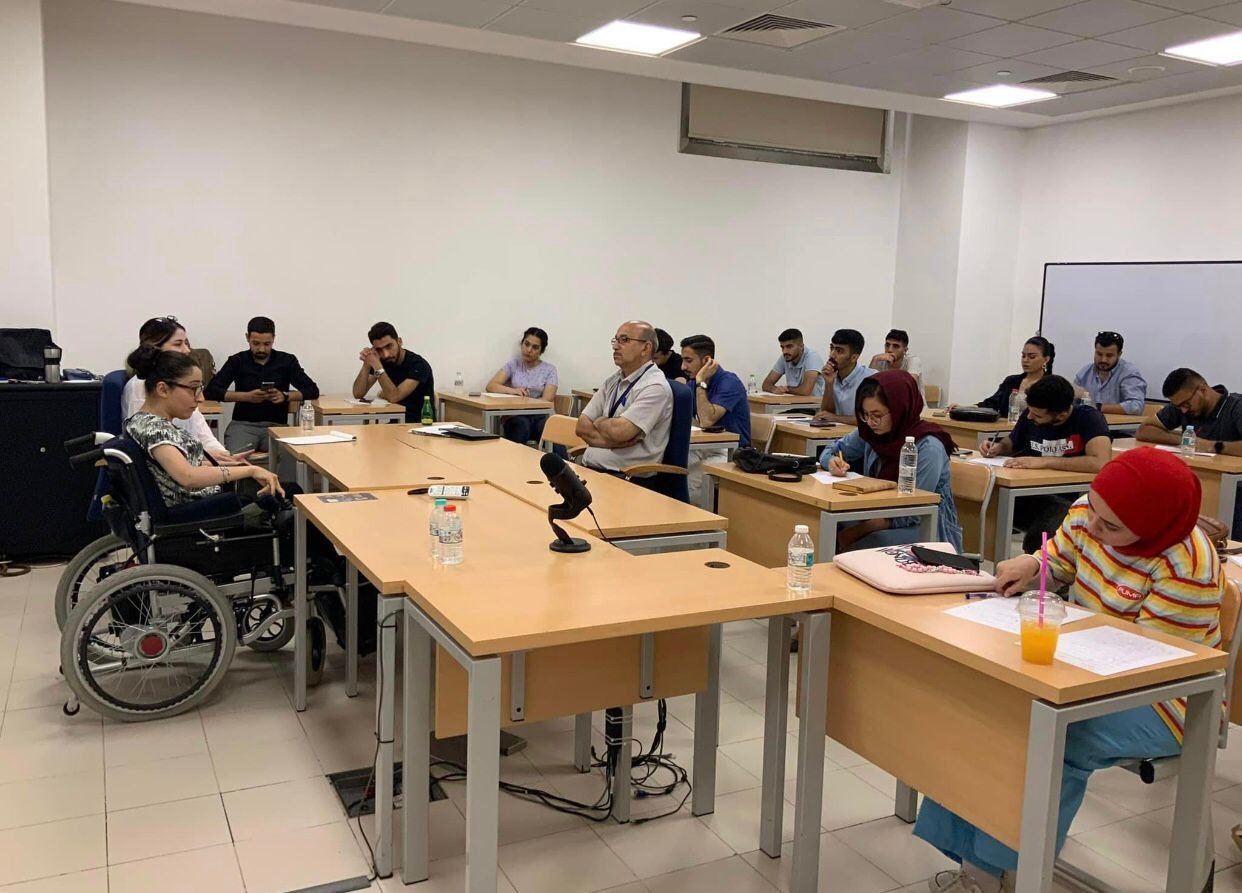
So, the guest speakers are fundamental in expanding students’ knowledge of disability, deepening their learning because they breakdown the classroom walls and bring real life experiences to the class atmosphere. This being said, each guest speaker has a different type of disability within a different story. This is what also makes students excitedly wait for the next guest to get to know and eager to learn about her/his story and disability.
In my interview with Mr. Hikmat, a disabled lecturer at the University of Sulaymaniyah, and one of the guest speakers said, “We have access to the campus in terms of ramps almost everywhere, but that does not mean we don’t have any problems. For example, the lecture halls’ stage platform is too high, about 34 cm; so that I can’t drag my wheelchair and I am unable do my seminars on the stage platform where everyone does,” Mr. Hikmat added, “this is a very small example but says a lot.”
Mr. Bakhtawar, also a short stature university lecturer, has been one of the guest speakers and talked about the difficulties he faced and how his disability never let him stop reaching his goals, told me, “As disabled people, we face more challenges and barriers by the society than our own disabilities, and I never let their words discourage me. And I really thank Dr. Lynn for giving us this opportunity to come and give a lecture about disability and help the students to learn more about it from our experiences. I hope a similar course gets offered in the public universities too to educate as many people as possible.”
Ms. Andrya, a junior student at the Sulaymaniyah University, also talked about her experience with the accessibility in the university as a disabled student on a wheelchair and said, “As a disabled student I, I have overcome many obstacles and will never let my disability prevents me from what I want to achieve in life,” she also pointed out that, “having a disability course like this and fostering the students to be more educated about the topic of disability is very exciting and important.”
All in all, from the course has taught me that people with disabilities have access difficulties fighting the physical barriers and stigma in the society as a whole in the KRG/Iraq. “The attitude of discrimination,” Professor Rose explained, “goes hand in hand with ableism: believing that non-disabled people are superior over the disabled.”
Sam Crivello, one of the students who have worked hard to help the department of Disability Studies grow in Miami University, told me that,
“Over the past few years, I have seen the class sizes grow from only 12 people to over 40! People with disabilities are living in a world that is not fair at all to them. People at my university noticed these injustices and wanted to create an accessible community that is built for everyone. So I think it would be a great first step to have disability studies to change a generation’s perspective and the stigma rooted in societal views, media portrayals, and even architecture.”
A potential solution for the issue of disability in the society would be offering a course of disability in the universities of the Kurdistan Region. This would help students and the university staff to be more aware about people with disabilities and recognize their difficulties. And similar to what Crivello said, it seems like many students here at AUIS are also interested in taking the course, witnessing the growth in the class size every semester it gets offered.
In answering my question of whether having a disability course in the universities would push the government and education system to provide more accessibilities to students with disability, in particular, she said, “Yes, it definitely would because if students show how intense their passions and interests for disability studies are, it would put pressure on the government to establish physically accessible spaces for students at your university and eventually to establish a disability services center.”
If universities have one or more disability courses, everyone including students and faculties would question the physical accessibilities everywhere they notice the need to have them. The issue would go from being totally ignored to something discernible as the Introduction to the Disability Studies has approved it.
- Shanyan Nozad