
How Simone De Beauvoir Inspired The Early Feminists
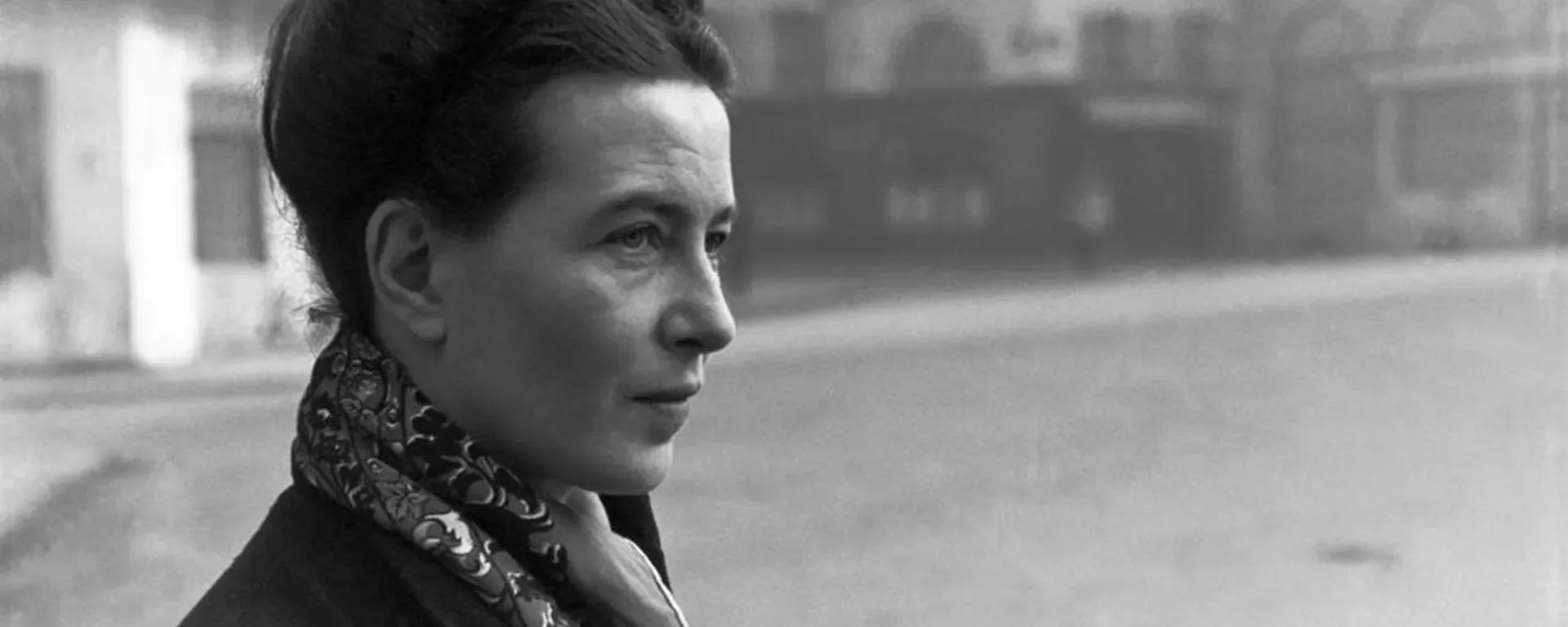
In 1949, French existentialist and feminist philosopher Simone De Beauvoir wrote The Second Sex, in which she describes what it’s like to be a female throughout the centuries and also investigates the definition of femininity which has been used to suppress women through the ages.
De Beauvoir claimed that Femininity is not inherent, rather it is a construct that has been taught through social and cultural beliefs to keep men dominant.
She redefined the limits of gender in an age where few women worked and the fight for women’s suffrage was still ongoing. “One is not born but rather become a woman” De Beauvoir wrote, “and to become a woman is to become The Other”. She stated that women have been historically treated as inferior to men. That society has put the obligation of fulfilling men’s needs and desires as the main role for women within the society. Furthermore, women have to seek external validation for their worth and have fewer rights and thus less public influence.
De Beauvoir used the comparison saying that women are treated like a living doll. The doll is submissive. Its role is to be dressed up, listen to its owner’s secrets, comfort her when she’s lonely, and lie at home when she is at school. De Beauvoir argued that when the girl grows up she will find herself in a situation similar to her doll. It is her role to attract a husband with her beauty, to quietly listen to his problems, and to wait at home for him when he is at work. An accessory, whether a plastic or from flesh and blood. And even if a woman did not marry, she would still be held to male standards through external pressure like beauty, diet, and fashion industries which all complicit in perpetuating the objectification of women.
The Second Sex became an essential female treatise, offering a detailed history of women’s oppression. It was a combination of personal experience and philosophical intervention, and provided a new language to discuss feminist theory. Her work represents a contentious moment in the emergence of early feminism .
Today, her work offers a philosophical language to be reimagined, revisited and rebelled against. A response this revolutionary thinker might have welcomed. “I don’t believe in the existence of a human nature”, said De Beauvoir in an interview. “All of us, whatever gender we’re taught to identify with, become products of our place, time, civilization, technique, etc. through cultural conditioning, not inner necessity”.
Calm and measured throughout the conversation, De Beauvoir defends her ideas, including the most provocative, that, as the interviewer paraphrases, “You don’t believe in the existence of a feminine nature. You believe people are first human, before being male or female.” She makes it clear right away that her anti-gender essentialism has roots in an even more fundamental, and very existentialist skepticism.
De Beauvoir’s existentialist feminism asked fundamental questions about the given categories of social identity that lock us into prefigured roles and shape our lives without our consent or control. She realized that social constructions of womanhood—not a Platonic ideal but a historical production—restricted her from fully realizing her chosen life’s meaning. “Despite her prolific writing, teaching, and activism, de Beauvoir struggled to be taken seriously by her male peers.” This was not only a political problem, it was also an existential one.
De Beauvoir was also a storyteller. Her personal experiences figured centrally in her philosophy. She published several acclaimed novels, and along with Nobel-winning novelists and playwrights Sartre and Albert Camus, made Existentialism the most literary of philosophical movements. But when it came to grand abstractions like the “meaning of life,” the answer all of them gave in their philosophical work was that such things aren’t hovering above us like Plato’s ideal forms. Each of us must figure it out ourselves within our flawed, imperfect, individual lives.
- Mawadah Hammadi