
Flipped Learning and Potential Impact on Kurdistan School System
The Kurdistan Regional Government (KRG) launched a wholesome approach to rehabilitate and rebuild each public sector in 2003. The education sector was among the top priorities of the government’s plan intended to improve the Kurdish population’s quality of life.
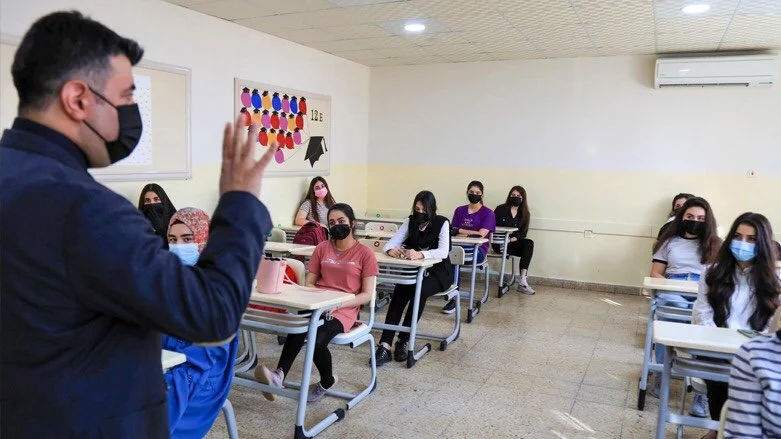
Between the years 2003 and 2005, the KRG initiated the construction of new schools, which started rapidly in the beginning before the process getting slowed down in the years after. The newly built schools intended to accommodate the ever-growing number of student enrollment each year. Per a 2007 survey, the class size in the Kurdistan Region of Iraq (KRI) has averaged 42 students per class.
The consequences of large class sizes mean that teachers are unable to give enough and necessary attention to all of the students in classrooms. Another challenge that learners cannot receive vital attention is the duration of classes, which is 40 minutes.
The large class size and short time propose a problem to the quality of education in Kurdistan. Evidently, the biggest drawbacks facing the school system are lack of instruction time to learn, and space to balance the high number of students.
The majority of today’s teachers and students might be unaware of the KRG’s Ministry of Education’s intention to implement student-centered instruction in schools with the adoption of a new curriculum, which came into being between 2008-2009, as a reform of the K-12 system. It was a student-centric program, a departure from the old brick-and-mortar method.
The new curriculum would shift the focus of the instruction on the students rather than teachers. It accounted for a greater amount of instructional time. Cheerlessly, the instructional duration remained the same, even though the new curriculum required it. Increasing the time was unlikely because the majority of schools operate in a standard workhour of a two-shift schedule.
The first shift starts at 08:00 a.m. and the second one starts at 12:30 p.m. Each shift has its own teachers, students, and administrators. Besides, each lesson is 40-minutes long, and students are often required to have five to six subjects per day. It was not possible to add more instruction time because that meant increasing the shift hours or the number of schools.
In return, the burden was on the teachers’ creativity to manage big classrooms and deliver instructions and finish the curriculum by the end of the year. In a follow-up report by Rand Corp, the teachers flagged the issue that “… current classroom conditions (large class size and insufficient class time) do not allow them to implement the student-centered instruction methods and instructional technologies they are encouraged to use.” (Vernez, Culbertson, Constant, & Karam, 2016).
In other words, teachers had to practice the old fashion way instead of adapting to the newly proposed methods, planned to enhance the quality of education.
It is obvious that the ministry is adamant about reforming the teaching methods. Following the outbreak of the COVID-19 pandemic, the Kurdish government, in order to not disrupt the education process, shifted the delivery system from face-to-face to online-based, which is the first of its kind in the history of the nation.
The newly adopted system might also contribute in abolishing the brick-and-mortar method. The government, part of the digital system, produced a lengthy educational hour-long video for K-12 classes on a platform called e-Wane (electronic lesson). Nevertheless, the public-school students via owning unique online accounts could access the pre-recorded lessons at their own convenient time and learn at their own.
According to data gathered from the platform, more than 500 thousand students have logged in to the platform. (UNESCO, 2020). The platform has video lessons prepared for courses taught in years one to 12. To account for students who do not have access to the internet, “…they will be able to access the materials on the Ministry of Education’s Educational TV channel that Saeed [Minister of Education] said broadcasts no less than 14 subjects for 12 hours every day,” Kurdistan 24 reported.
Struggling with the financial crisis it has been dealing with since 2014, the KRG had not been able to build new schools. Yet, the number of student enrollments is rising each year, making it difficult for education authorities to cope with the challenges, while the issues of time and space remain.
The online platform might not be taken advantage of in schools in case the pandemic ends as its usage was not mandatory initially. As the government is unable to construct new schools, it can alternatively benefit from various ways to lessen the impact of the issues.
Continuing the electronic classes could be a temporary solution until it can finance the establishment of new schools and include even more instructional design models with a student-centered focus. An instructional design trend that can help with the lack of instructional time and class space is to utilize the produced platform (e-Wane) for future classes is the flipped learning model.
The flipped learning model means that teachers can assign videos or parts of the videos to students to learn at home. In other words, the learning of new subjects will happen at home. It will give students to have freedom of learning at their own pace. Further, the students will do their homework or practice their skills in the classroom under the supervision of the teacher.
Since the curriculum is student-centric as it requires students to solve problems on their own and teachers are limited by various factors to achieve the curriculum’s expectations, then flipped learning is one of the solutions. “The basic notion of flipped classroom approach is to deliver the teacher’s lectures before class through online videos, in order to free-up the in-class time for active learning and problem-solving activities.” (Lo & Hew, 2017).
Instead of focusing on expanding classrooms, it is advantageous to focus on class time and free it up to make room for activities. Practice makes perfect; flipped learning is a product of that thought.
Moreover, in order to make the flipped learning model work, the KRI needs two essential components, which the current school systems have. The two components laid out by Bishop and Verleger (2013): “… (1) direct computer-based individual instruction outside the classroom through video lectures and (2) interactive group learning activities inside the classroom.” (Lo & Hew, 2017).
As stated earlier, online resources are now already available in the Kurdish region, thanks to the pandemic. And the classroom activities are tailored toward group learning activities, but the majority of teachers do not implement them due to time restrictions and preparedness.
Per a 2014 survey conducted on 2,904 teachers in the KRI, 48% of them reported that lack of time does not allow them to perform group work activities and 50% of them reported that students do not prepare for the activities. (Vernez, Culbertson, & Constant, 2014).
The flipped learning model is the perfect solution to the two reported shortcomings as it saves the teachers’ time, and it obliges students to get prepared before attending classes. The classroom time can then be used to allow the teacher to use their creativity to help the students with homework and group projects and elaborate on the subjects beyond the textbooks.
Unlike the current situation in the KRI, the difficulties of implementing flipped learning model in other nations fall on the teachers as they need to prepare a curriculum suitable to the model and find online resources for the students.
In the absence of online resources (if they use videos), the teachers then need to produce the resources themselves and find platforms for students to access. On the other hand, the model is new, and it was hard to convince students to be comfortable with e-learning in the pre-pandemic era.
Luckily for Kurdistan, the pandemic gave students the experience to be comfortable with online learning and they now know how to use the platforms effortlessly. Also, the curriculum is issued by the government and all public schools teach the same subjects; use the same textbooks; and have the same timeline.
A nationwide curriculum makes the teachers’ jobs much easier as the government has provided them with online resources, so they can use them in the academic year and stay on a timeline.
A case study on the model was conducted in Saudi Arabia, where more than 60% of the subjects agreed or strongly agreed (combined the two options) that the model is more engaging for students, preferred videos to learn, and increased teacher-student interactions.And mentioned that before the flipped learning model, the teachers were “unable to answer the queries of students due to the time restrictions.” (Alwaqdani, 2018).
Back in Kurdistan, students and teachers can still use the e-Wane platform and their credentials will remain the same. The platform gives access to teachers to check who has watched the videos. Since it is a government-owned platform, students’ data will remain safe and will not be sold to third-party companies.
If flipped learning model is inherited by the government, it will lay the path toward student-centered learning and fully employ the activities of the new textbooks. It will save the budget spent on the development of the platform to go to waste in a post-pandemic era. If students go back to face-to-face classes, then finding another purpose for the online platform would be to use the online resources in another context, the flipped learning model.
Dara Mahmood, a university professor, who did not have experience with online courses in a pre-pandemic era, was interviewed for an article about online learning in Kurdistan.
He answered a question on whether Kurdistan is ready to make work from home with “… the beauty being an educator is taking risks, finding novel approaches to solving problems, and learning from the mistakes and hardships we face on the road.” (Mhamad, 2020). Proposing a new method of teaching in Kurdistan might sound outlandish but the educators and students are prepared to undergo the experience.
Lastly, the most important benefit of this report is to introduce the field of instructional design to Kurdish schools. In the Region, people are unaware of the instructional design field because the nation is all taught the same subjects and textbooks.
The teachers who have graduated from college have taken courses in pedagogy only and that is how far they have come to the field of instructional design. This report will be written with the hopes of opening the eyes of those teachers, and administrators to the importance of this field.
Students in Kurdistan are taught via brick-and-mortar methods of writing the lessons on the board and receiving homework to memorize. On the flip side, implementing the model is far easier in Kurdistan than in other nations because the resources are available, and students are prepared. The teacher will have free time in-class time to help individual students one by one during the lesson.
The proposed instructional solution is presented with the hopes of increasing student engagement in the classroom by lessening the load on teachers and directing them to focus on student engagements through group projects, and class discussions.
Works Cited
Vernez, G., Culbertson, S., & Constant, L. (2014). Strategic Priorities for Improving Access to Quality Education in the Kurdistan Region—Iraq. RAND Corporation.
Vernez, G., Culbertson, S., Constant, L., & Karam, R. (2016). Initiatives to Improve Quality of Education in the Kurdistan Region — Iraq. RAND Corporation.
UNESCO. (2020, May 10). UNESCO, the Ministry of Education of the Kurdistan Region and the European Union continue to reach out to students at home for learning never stops. Retrieved from UNESCO: https://en.unesco.org/news/unesco-ministry-education-kurdistan-region-and-european-union-continue-reach-out-students-home
Sherwani, H. (2020). Kurdistan announces e-school initiative to restart classes amid COVID-19 curfew. Erbil: Kurdistan 24.
Lo, C. K., & Hew, K. F. (2017, January 7). A critical review of flipped classroom challenges in K-12 education: possible solutions and recommendations for future research. Research and Practice in Technology Enhanced Learning, 12 Article 4.
Mhamad, A. A. (2020). Is Kurdistan ready to make education work from home? Erbil: Rudaw.
Alwaqdani, M. (2018, October 31). Flipped classroom approach in Saudi Arabia context: students’ experiences in a flipped computer science classroom in high school. International Journal of Current Research, 10(10), 74908-74914.
- Shko Shwan Fuad