
A Breakdown of Trump's 2026 State of the Union Address
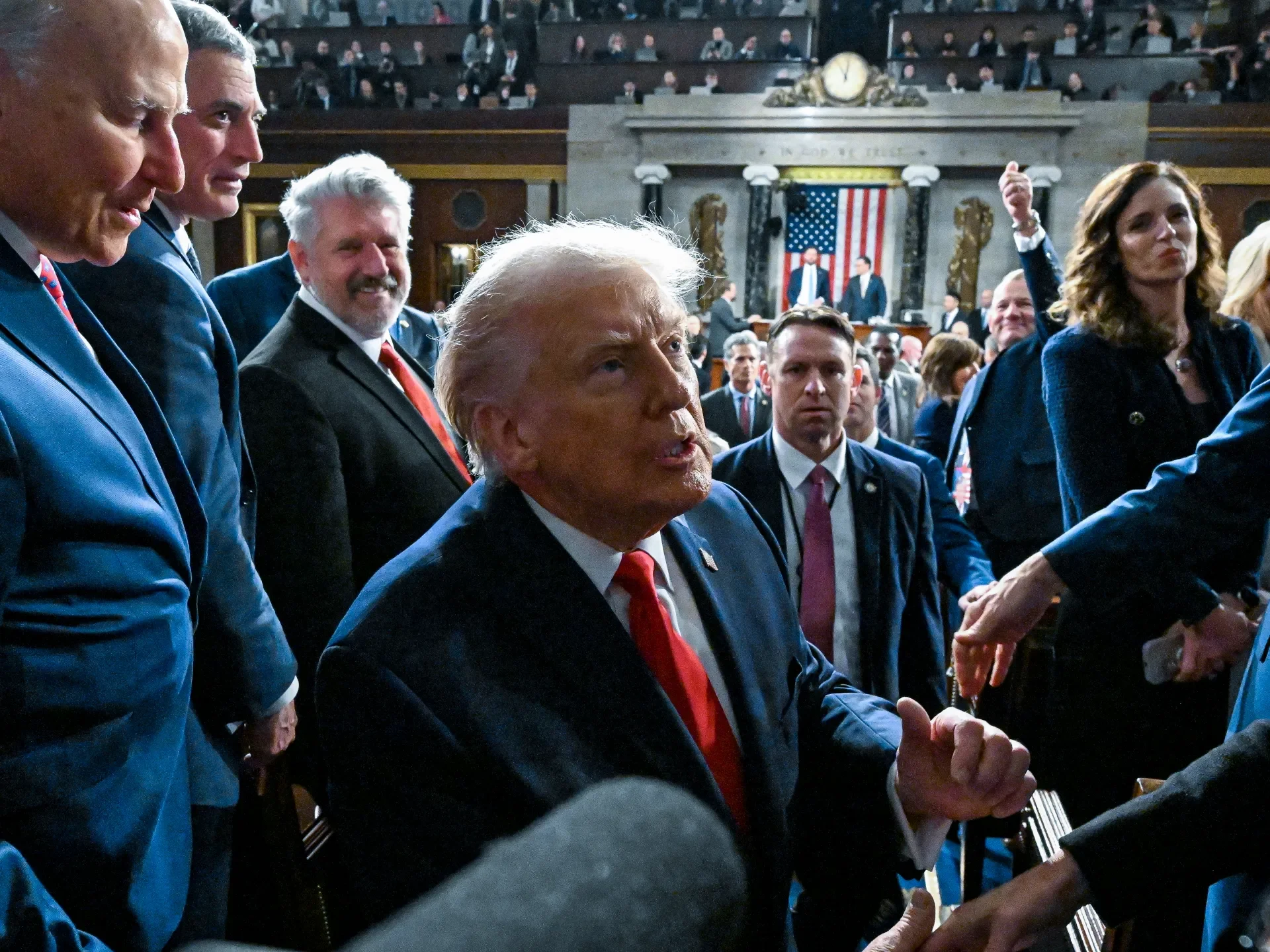
On the 24th of February, 2026, American President Donald Trump gave his first annual State of the Union address in his current presidential term. The address became the longest recorded address in American history, delving into the country’s domestic condition while disparaging the Democratic Party and briefly mentioning international affairs. The address came at a pivotal moment for the Trump administration, marred by a government shutdown, the release of the Epstein files, and increased levels of scrutiny.
The president began his address with a rundown of triumphs: improved economic conditions, border security, and military recruitments. He boasted of a historic low in crime and inflation rates, record highs for the stock market, a decrease in mortgage costs, heightened oil and gas production, and $18 trillion in investments in a single year. The Biden administration was blamed for these issues, contrasted with the motif of an American resurrection as the country approaches its 250th anniversary. The address recounted several anecdotes of American victory in the Olympic hockey teams, among other guests. Meanwhile, Democratic Congress members and the Supreme Court justices present were chastised.
Domestically, Trump celebrated the increasing number of jobs in the private sector under his presidency, while Democrats were held responsible for the cost of healthcare and other living expenses. The president promised to protect Social Security, Medicare, and Medicaid, alongside tax alleviation on tips and overtime. Unregulated migration was blamed for increased crime, including voter fraud, as the president promised to continue his immigration crackdowns. Additionally, the Supreme Court was criticized for striking down his tariff efforts, to which he credited American economic improvement, despite domestic and international controversy.
The president highlighted foreign affairs in passing with a reference to “new friend and partner” Venezuela, with the country supplying the U.S. with oil after the capture of the former Venezuelan president. He credited himself with ending eight wars and his efforts on the Russia-Ukraine and Israel-Gaza wars. Iran was touched upon; the president stated he preferred a diplomatic solution to Iran’s nuclear plans but did not make his demands clear. An Iranian spokesperson later responded, "No one should be fooled by these blatant falsehoods."
The official Democratic opposition, spearheaded by Virginia Governor Abigail Spanberger, cemented their position that the address provided no solutions for current issues and highlighted Trump’s fallaciousness. She focused on the high cost of living, an issue highlighted bipartisanly, and claimed that Trump has done nothing to lower it. She also touched on a perceived lack of transparency and effectiveness from the current administration regarding tariffs, immigration policies, and the Epstein files.
Critics noted that the address had an undercurrent of anti-constitutional sentiments, such as various references to a third term and voting being a "privilege." Moreover, the speech was seen as divisive along party lines, with Democrats being spearheaded as the cause of the nation’s troubles. Various Democratic officials did not attend the address, while some present protested. Many added that the address failed to give new insight on Republican strategy due to sticking to typical Republican talking points instead of attracting any new voters. Some issues, notably Greenland, Elon Musk’s Department of Government Efficiency (DOGE), and the Epstein files, were left unaddressed. News outlets like BBC, CNN, and NBC have found claims of voter fraud, decreased crime and inflation, and price cuts, among others, to be untrue, misleading, exaggerated, or unsubstantiated. Their polls have shown that voters are not entirely convinced of the stock market improvements and tariffs that Trump has flaunted or have noticed a change in their daily lives during his second administration.
- Maryam Emad